





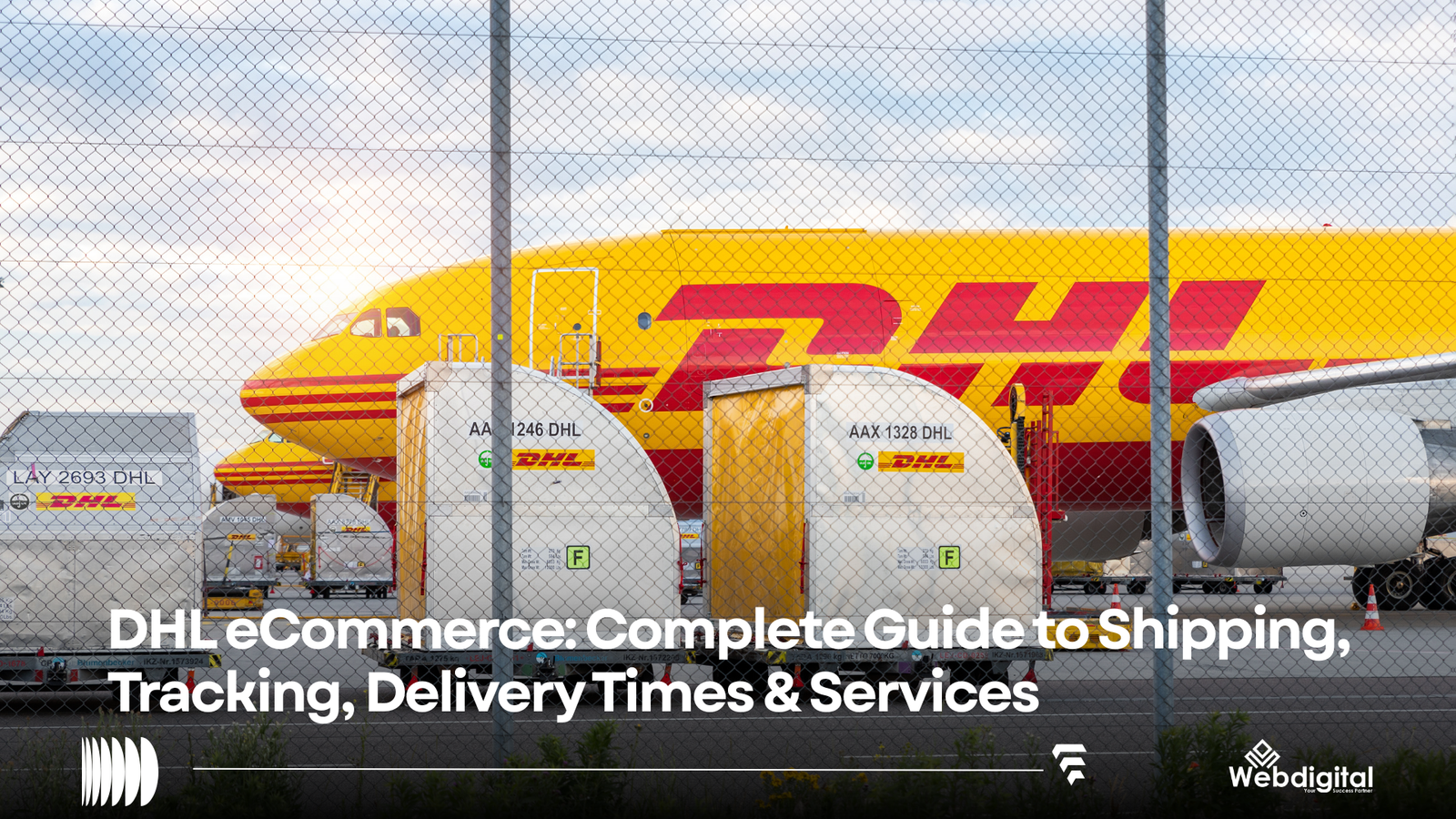
You may have come across DHL eCommerce when researching how DHL handles shipments from online stores, or questions regarding the company, the service, or the difference between DHL eCommerce and DHL Express.
The division of DHL called DHL eCommerce focuses on the logistics of eCommerce deliveries. This division provides services covering the shipping needs of online businesses. These services vary from country to country, and may include such things as delivery and shipping solutions, parcel transportation and logistics, and fulfillment.
Sometimes, the only shipping service solution that an online seller uses, is the ability to track shipments. DHL eCommerce offers an advanced tracking solution. The division also provides shipping and logistics solutions for order fulfillment and delivery, cross border shipping, and inspection and access of returned shipments.
DHL eCommerce focuses on shipping and delivering commercial goods over the internet. Exact shipping and delivery times may vary, and are often determined by the shipping origin and destination, as well as the type of product shipped. The division may use other carriers to provide the last leg of the delivery. DHL eCommerce ships to over 220 countries and territories.
What Does DHL eCommerce Do?
DHL eCommerce provides services related to parcel delivery, international and cross-border e-commerce, logistics, and more. Services may vary by country and by the specific DHL eCommerce product.
How Does DHL eCommerce Work?
Generally, the process is as follows after an online order is placed:
- Merchant fulfills order and prepares shipment
- DHL pick up
- Sortation
- Transportation
- Processing by destination delivery network
- Final mile delivery
- Confirmation of delivery
Let’s look at an example to explain this process further.
A customer orders a product from an online merchant in the U.S. The merchant uses DHL eCommerce to provide delivery services.
The merchant prepares and labeled the parcel.
DHL receives the shipment.
The parcel is integrated into the DHL delivery and logistics system.
The parcel is transported to its final destination.
International shipments may require passing through a customs office.
The parcel is integrated into the delivery and logistics system of the final destination’s postal service.
The final mile delivery is done by the postal service.
The system sends updates to the customer about the delivery status of the parcel.
The system and services may vary by country and by the service provided by DHL eCommerce.
How to Track Your Package with DHL eCommerce
If you have your shipment ID or tracking number from your online merchant, you can use that to follow your shipment on the DHL eCommerce website.
DHL’s eCommerce site also allows users to enter tracking numbers to retrieve the status of multiple deliveries.
Where Can I Find My DHL eCommerce Tracking Number?
Your tracking number can be found in any of the following:
- Shipment confirmation email
- Order confirmation email
- Merchant’s order page
- Your account on the merchant’s website
- Delivery confirmation
- SMS
If you can’t find your number, you should first contact your merchant.
DHL notes that tracking numbers are a combination of letters and numbers and can be of different lengths.
How Long Does DHL eCommerce Tracking Take To Update?
Although tracking numbers are scanned frequently, it may take some time for the status to be updated.
It can take 24 to 48 hours after the number is assigned for the first status to be posted.
DHL eCommerce may take a while to scan your shipment for the first time. If there is no status update for your shipment, it doesn’t mean your shipment has been lost.
Why Has My DHL eCommerce Tracking Not Been Updated?
There may be several reasons for no status update:
- The shipment has not been scanned yet.
- The shipment is en route to its next facility.
- The service does not continually update the status of the shipment.
- The delivery service’s partner has not recently scanned the shipment.
- The shipment is being cleared through customs.
Movements are being disrupted.
The tracking system has not yet processed the last event.
According to DHL, some online businesses use milestone tracking, which means that during transportation there may be long periods of time in which the shipment is not scanned.
The estimated delivery times for DHL eCommerce vary widely depending on the country of origin and the country of destination.
Other factors that determine delivery times are:
- Type of product
- Domestic or international shipment
- Distance
- Local delivery service
- Seasonal variations
- Customs clearance
- Weather conditions
- Operational disruptions
DHL’s international delivery times also vary according to the mode of transport (air or sea).
For international transport by air, delivery times vary from 1 to 5 days. International transport by sea can take from 10 days up to 12 months, and still depends on the country of destination.
DHL estimates that international eCommerce shipments in the USA would take the following times:
- Parcel International Expedited: 1 to 7 days to the UK and major EU member states and Canada
- Parcel International Direct: 3 to 10 days
- Packet International: 4 to 8 days
- Parcel International Standard: 4 to 8 days to Europe and Canada; 8 to 14 days to other countries
Note that these timeframes are service-specific, and should not be misunderstood as general DHL eCommerce delivery times.
Does DHL eCommerce Operate on Weekends?
Deliveries on Saturdays depends on the local situation.
Because of these variations, the delivery time estimate communicated by DHL eCommerce should not be relied upon, and the delivery time estimated by the online store should be taken as the more accurate time estimate for that order.
In the U.S., DHL has different services for domestic shipments. For example, they offer DHL Parcel and DHL Parcel Plus. DHL Parcel Plus has features that DHL Parcel doesn’t offer like picking up packages over 70 pounds. DHL generally has ground services with expedited shipping.
Some of the factors that help determine shipping services internationally are:
How quickly do the packages need to be delivered?
Where are the packages being delivered?
How large and how heavy are the packages?
Is there package tracking?
Are there special customs agreements?
Will the package require the payment of duties and taxes?
Because of the above reasons, two packages shipped with DHL eCommerce can be delivered differently.
DHL eCommerce International Shipping
Cross border shipping is one of the main uses of DHL eCommerce.
When selling online and shipping internationally, there are extra things to consider compared to just shipping domestically, such as:
- Filling out customs forms
- Charging the right import taxes and duties
- Restricted and prohibited items
- International shipping address and format requirements
- Return shipping
- Internationl customer order and shipment tracking and status
International shipments require extra communication with the customer.
DHL have shipping services for cross-border eCommerce with various shipping speeds and customization levels.
Some of the DHL eCommerce shipping services are DDU while others are DDP.
What is DDU?
DDU means the seller isn’t responsible for charging and collecting import duties and taxes.
What is DDP?
In a DDP shipping situation, the seller is responsible for charging and collecting import duties and taxes.
The actual customs and tax treatment depends on a number of situations.
DHL eCommerce generally charges a volume based price with a base price per shipment.
Cost factors for shipping include:
- Parcel dimensions and weight
- Origin and destination
- Type of service
- Volume of shipment
- Delivery speed
- Fuel and other surcharges
- Customs and duties
- Additional services
- Merchant agreements
DHL’s eCommerce FAQ states that pricing is based on a customer’s shipping profile.
So, what a business sees advertised as a DHL eCommerce rate may not reflect the rate charged to the business.
Other Considerations
In addition to weight, the actual physical dimensions of a package can impact shipping costs. If a business regularly ships multiple orders, understanding package and product data can help the business more accurately model shipping costs.
DHL eCommerce and DHL Express vary in their focus.
DHL eCommerce focuses on parcel logistics for the eCommerce industry, while DHL Express focuses on logistics for the movements of time sensitive shipments and documents.
DHL eCommerce usually relies on partner and local networks to move shipments, while DHL Express uses a dedicated network.
DHL Express provides extensive visibility to shipments, and has a broader network than DHL eCommerce. Both integrate easily with a business’s systems and are ideally suited for different shipping needs.
For very fast transportation times, consider another option. If your business model includes a high volume of shipments, for example an online store, DHL eCommerce could work for you.
DHL eCommerce for Online Businesses
Of course, DHL offers a lot more than shipment delivery. For online business needs, DHL provides an array of services from delivery and shipping to integration and fulfillment.
DHL’s services help businesses integrate delivery and shipping processes to their online business and marketplace platforms.
For a small online business with a low shipment volume, order management and shipping process automation may not be necessary or even useful. However, with business expansion and growth, increased order volume may strain the business and make order management and shipping process automation a must.
DHL eCommerce Returns
In e-commerce, the delivery of the shipment to the customer is just one step. Other aspects of post-purchase order fulfillment include the management of returned shipments. These include providing the customer with a return shipment label and return address, processing the returned shipment, and adjusting the inventory. International shipments add an additional layer of complexity with the management of return shipments and customer communication across international borders.
DHL provides integrated logistics services and products for e-commerce returns. The return process is dependent on the shipping service and location.
What Happens if My DHL eCommerce Package is Delayed?
A shipment may be delayed for a number of reasons. It does not necessarily mean the shipment is lost.
Most Likely Reasons Include:
- Customs Clearance
DHL states that various factors can impact how long it takes to clear customs and that it may result in payment of duties and/or taxes and the presentation of documents.
- Weather
Adverse weather conditions can impact the movement of goods.
- Service Backlogs
Extra-ordinarily large volumes of shipments can result in a backlog and impact service times.
- Type of Service
DHL eCommerce offers services whereby shipments are transferred to local delivery partners and, in some cases, tracking may not be available for the entire delivery journey.
- Local Delivery Partners
In some cases, the final leg of the journey may be undertaken by a local or postal delivery service.
Why is My Status Still Showing “In Transit”?
Check the address where the shipment was sent.
Ask members of your household and/or staff.
Ask if it was left at a specified place.
Contact the local delivery service.
Contact the merchant.
In the absence of a scan, it may be necessary for the merchant to reach out to their customer service team and/or DHL to open an investigation.
Why isn’t My Tracking Number Workings?
First check to make sure that the tracking number was not entered incorrectly.
If the label was recently generated, there may be a short delay before the tracking number becomes available.
Check with the merchant to see if the tracking number was entered correctly.
Use the DHL site to track the shipment.
Contact the merchant.
If the merchant is unable to assist, contact DHL.
Customers should contact the shop or shipper they received their DHL delivery notice from when the tracking ID provided is not functional.
Phishing is a method of attempting to obtain sensitive information by misleading recipients into believing the source of the information request is legitimate and/or trustworthy.
Beware if a message requests personal financial information, including but not limited to, bank account information or credit/debit card information.
Do not click on any attachments or links provided in the message.
Do not trust the credibility of the message if it contains an unfamiliar tracking number.
Urgent messages requesting payment are typically fraudulent.
Contact DHL directly or visit their official website if you are not sure whether a message is from them.
Fraudsters use various techniques and methods to obtain personal information. DHL recommends that users take extra caution when providing their personal information.
You can use the official DHL tracking site to verify the status of your shipment.
Please note that DHL eCommerce is a division of DHL International that provides shipment services within select markets in Asia.
When providing shipment services from India to international customers, DHL eCommerce and DHL Express are to be differentiated.
Prior to deciding on which service to use, consider the following: Where are your customers located? How many packages do you need to ship? What is the average weight of the packages? What is the expected shipping time? Are the shipping services to be international? Who will be responsible for custom duty and tax? What are the shipping and returns policies? To what extent to customers track their shipment?
DHL has other services to assist eCommerce businesses.
To learn more about the services offered by DHL, please visit their official site.
- Show Delivery Window Estimates
It is important to give an estimate of when your customer’s order will arrive. Overestimating and promising a delivery date is better than guaranteeing a date that the delivery service will not be able to support.
- Automate Label Creation
A service that automatically generates shipping labels can be beneficial for larger stores by eliminating shipping label data entry and reducing shipping label mistakes.
- Provide Shipping Labels, Then and There
Providing shipping label information to your customers as soon as the shipment is prepared and ready to go provides peace of mind to your customers.
- Display International Shipping Costs
Make shipping costs, customs and fees clear to your customers prior to them completing their purchase.
- Provide Easy Returns
A well-designed returns process can reduce customer service contact.
- Keep Tabs on Shipping
Track and analyze the following:
How long does it take for the shipment to get to the customer?
How many shipments have exceptions when delivering to customers?
How many shipments are returned by customers?
How many customer complaints are related to shipping?
How much does it cost to ship an order?
- Comparing Services is as Important as Comparing Price
When choosing a shipping service, consider the speed of delivery, features, support and coverage as well as cost.
DHL eCommerce
A few things to keep in mind when using and evaluating DHL eCommerce:
DHL eCommerce is focused on logistics for eCommerce parcel shipping.
What is offered and provided by DHL eCommerce varies by country.
How long it takes to deliver a package depends on the product being shipped and the destination.
Package tracking may be limited.
Shipping internationally may require customs.
Deliveries may be done by post or other delivery services.
Pricing is determined by shipment characteristics and shipping volume.
DHL eCommerce and DHL Express are separate businesses.
It is best to look at the specific terms of a shipping service rather than rely on a general delivery estimate.
Questions About DHL eCommerce
Is DHL eCommerce the same as DHL Express?
Both services are operated by the same company, but have different business units. DHL Express specializes in international air shipping. DHL eCommerce specializes in parcel logistics for e-commerce and shipping within the same country or across borders.
How do I track DHL eCommerce packages?
You can use the tracking tool on the website and enter the tracking number or shipment ID provided by the merchant. Users can enter multiple tracking numbers in a single request.
How long will DHL eCommerce take to deliver?
There are many variables that affect delivery time. DHL provides published estimates for their services and routes.
Why is my tracking status showing as “not in transit”?
There are several reasons for a lack of updates on the status of your shipment. DHL eCommerce uses milestone tracking. This means there may be long periods of time between updates on the status of your shipment.
Does DHL eCommerce ship internationally?
Yes. Cross border shipping is available. Services and shipping destinations vary by country.
Why is my DHL eCommerce shipment not delivered by DHL?
For some DHL eCommerce services, the final step of shipping is handled by another company. DHL may also use a postal service for the final leg of the delivery.
Does DHL eCommerce have tracking?
Tracking is available for most services. However, the type of tracking available may depend on the service and the destination. Some services may not have full tracking.
Can I update my DHL eCommerce delivery address?
This may be dependent on the service and the status of the shipment. The address may be changeable before the shipment is removed from a DHL sort facility. Contact the DHL customer service or the merchant for the shipment in question.
What should I do if my DHL eCommerce shipment is lost?
Contact the merchant or the online store from which you made the purchase. The merchant is DHL’s customer and may need to authorize an investigation for the service and country in question.
DHL eCommerce provides a range of logistics services for online business including local and international parcel delivery, shipping, logistics management and fulfillment.
For customers, the most important information for order fulfillment is the tracking number, delivery date and order status. For business customers, the most important information is shipping costs, delivery time, international scope, integration and automation capabilities and the management of returns.
Due to the varying nature of DHL eCommerce services, the best way to evaluate a shipment is to analyze the specific DHL product, shipment origin and destination as well as the terms of the service.
When you’re an online merchant, the best way to determine which service best suits your needs is to analyze the terms of the service, shipping costs and delivery time, and to consider the integration and automation capabilities for international shipments, management of customs and returns.